
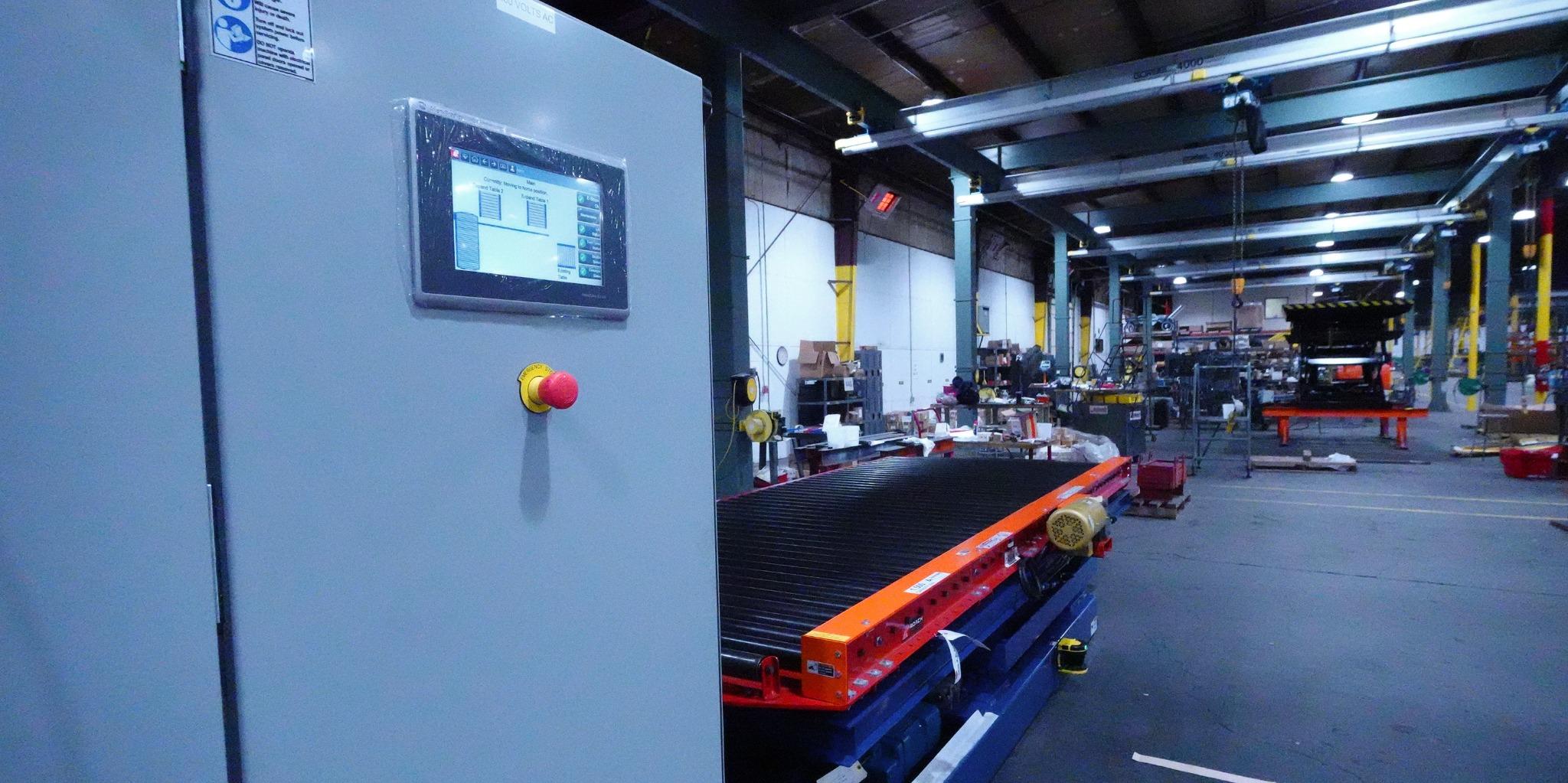
How Custom Industrial Control Panels Deliver Measurable ROI in Modern Manufacturing
Manufacturing automation depends on control systems that can manage complex processes, integrate seamlessly with diverse equipment, and adapt as production demands evolve. Across manufacturing, warehousing, and OEM environments, we consistently see operations constrained by generic, off-the-shelf industrial control panels that force teams to work around design limitations rather than optimize performance. When control panels are treated as general components, they often become bottlenecks rather than enablers.
Industrial control panels should function as the operational backbone of an automation system—coordinating equipment behavior, managing data exchange, enforcing safety logic, and supporting visibility across the operation. When these systems are engineered specifically for the application, they become strategic assets that directly influence uptime, throughput, maintainability, and long-term return on investment.
In this article, we’ll cover:
- Why modern manufacturing requires smarter, customized control solutions
- The hidden costs that generic panels introduce in automation environments
- How custom industrial control panels improve performance and ROI
- Real-world applications of custom control panels in warehouse and manufacturing automation
- What to look for in a control panel partner that delivers long-term value
See how our custom control panels eliminate integration challenges and reduce downtime.
Why Manufacturing Needs Smarter, Customized Controls
Modern manufacturing operations depend on automation systems that must deliver uptime, precision, and adaptability under real-world production demands. Industrial control panels have evolved far beyond simple electrical enclosures. Today, they operate as the decision-making core of automated systems—coordinating motion, managing real-time data, enforcing safety logic, and enabling diagnostics across increasingly complex environments.
As manufacturing automation expands, control systems must reliably interface with PLC platforms, intelligent drives, smart sensors, robotics, conveyors, AGVs, and higher-level software systems such as warehouse management and manufacturing execution platforms. These interactions require deliberate engineering to ensure consistent performance, predictable behavior, and long-term maintainability.
When control panels are designed generically, we frequently see integration challenges, maintenance inefficiencies, and performance limitations undermine automation investments—often because the process is forced to conform to the controls rather than the controls being engineered around the process. By designing custom industrial control panels to match real operating requirements, we help manufacturers align control infrastructure with how their systems actually run, supporting scalability, improving system resilience, and delivering stronger returns over the full lifecycle of the automation system.
The Hidden Costs of Generic / Off-the-Shelf Panels
Off-the-shelf industrial control panels are often selected to reduce upfront costs or shorten procurement timelines. While this approach may appear efficient during early project stages, we regularly see hidden operational costs emerge once systems are commissioned and placed into production. These costs surface when flexibility, integration, and reliability are tested under real operating conditions.
Generic designs are built around assumptions that rarely align with the realities of modern manufacturing environments. Over time, these mismatches create inefficiencies that erode ROI and restrict the ability to optimize or expand automation systems.
Lack of Flexibility for Unique Equipment or Workflows
Generic control panels are designed to support standardized equipment configurations and predictable workflows. In practice, manufacturing environments often include specialized machinery, non-linear material flow, or evolving production requirements. When control panels lack flexibility, operations teams are forced to adapt the process to the controls rather than the controls to the process.
This lack of adaptability leads to field modifications, added components, and software workarounds that increase system complexity. These changes not only raise installation and commissioning costs but also limit future optimization and scalability, reducing the long-term value of automation investments.
Integration Challenges with PLCs, Drives, Sensors, and OEM Equipment
Seamless integration between PLCs, variable frequency drives, sensors, robotics, conveyors, and OEM equipment is essential to automation performance. Off-the-shelf panels often fail to anticipate the specific communication protocols, I/O requirements, and network architectures required for these systems to operate cohesively.
The result is longer commissioning timelines, increased programming effort, and more complex troubleshooting. Integration challenges also introduce long-term support risks, particularly when systems are modified or expanded, further increasing lifecycle costs.
Higher Maintenance Due to Mismatched Components or Poorly Optimized Layouts
When control panels are not engineered for the operating environment, component placement and thermal management frequently suffer. Crowded enclosures, inconsistent component selection, and inadequate airflow increase electrical and thermal stress on components.
Maintenance teams spend more time diagnosing issues, tracing wiring, and accessing components, which increases mean time to repair and overall maintenance costs. Over time, these inefficiencies compound, driving up the total cost of ownership.
Downtime Caused by “One-Size-Fits-All” Design Limitations
Panels that are not designed for actual load conditions and duty cycles often become failure points. Insufficient cooling capacity, undersized power distribution, and limited scalability of safety circuits increase the risk of unplanned downtime.
Emergency modifications during production are far more disruptive and expensive than proper engineering during the design phase, making generic panels a long-term operational liability rather than a cost-saving measure.
These hidden costs demonstrate why generic control panels frequently become operational constraints—and why custom engineering is essential for sustainable automation ROI.
How Custom Industrial Control Panels Improve Performance and ROI
Custom industrial control panels improve ROI by aligning engineering decisions with real operating requirements rather than generic assumptions. This approach delivers measurable improvements in reliability, integration efficiency, and long-term cost control across manufacturing environments.
Purpose-Built Engineering
We design industrial control panels around exact application specifications, including voltage requirements, amperage loads, duty cycles, environmental conditions, and safety standards. This precision ensures components are properly sized, protected, and positioned for the operating environment.
Purpose-built engineering eliminates unnecessary over-specification while avoiding under-engineering that leads to premature failures. The result is smoother installation, faster commissioning, reduced rework, and systems that perform as intended over the long term.
Seamless Integration With Manufacturing Automation
Our custom control panels are engineered to integrate directly with conveyors, robotics, AGVs, material handling systems, and packaging lines. Communication protocols, network architectures, and I/O configurations are defined early in the design process to ensure consistent system behavior.
As manufacturers continue to adopt Industry 4.0 strategies, control systems must support real-time data exchange, system visibility, and connectivity between operational technology and higher-level software platforms. We engineer our control panels to meet these requirements by supporting real-time data collection, structured PLC communication, and integration with intelligent devices that deliver actionable operational insights.
OSCO Connect extends this integration by enabling remote monitoring and real-time system visibility. This capability supports faster diagnostics, improved operational awareness, and proactive maintenance strategies that reduce downtime and support continuous improvement initiatives.
Higher Reliability & Lower Maintenance Costs
Thoughtful panel layouts prioritize intentional component placement, optimize airflow, and clearly separate high- and low-voltage circuits while maintaining organized wiring paths that simplify troubleshooting. By positioning components based on heat load, access requirements, and signal integrity, these design choices reduce component stress, extend service life, and lower ongoing maintenance effort.
Clear documentation and consistent design standards further reduce troubleshooting and repair time, contributing directly to lower lifecycle costs and improved system availability.
How OSCO Implements Custom Control Panels to Solve Complex Automation Challenges
In warehouse and manufacturing environments where AGVs, conveyors, vertical transport equipment, and control software must operate as a coordinated system, reliability depends on how well those systems are integrated at the control level. This case study highlights how we implement custom control panels to manage that complexity, enabling multiple automated technologies to function as a single, coordinated system where control panel design and integration are critical to reliable operation.
The Challenge
In an automated AGV-based rack retrieval and storage environment, multiple technologies are needed to function as a single, coordinated workflow. AGVs transported pallets to multi-level rack systems, vertical conveyors handled elevation changes, and warehouse management software coordinated inventory movement across the facility.
Precise timing, accurate positioning, and continuous communication were required to maintain throughput, prevent system conflicts, and ensure reliable operation under varying load conditions.
The Solution
We engineered a custom, multi-panel control architecture that served as the integration hub for the system. Our control panels coordinated AGV movement, managed conveyor sequencing, and interfaced directly with the warehouse management system to track staging lanes and drop zones in real time.
A dual-feedback positioning strategy ensured accurate load transfer under heavy operating conditions, supporting reliable AGV docking and vertical transport across multiple levels.
The Results
The custom control solution enabled reliable autonomous operation across all integrated systems. The facility achieved improved uptime, consistent material flow, enhanced operational visibility, and a scalable automation platform that supports future growth.
Why Custom OEM Control Solutions Deliver Strong ROI
OEMs face unique challenges when delivering equipment to diverse end-user environments, where performance consistency, reliability, and supportability directly impact lifecycle costs and customer satisfaction. We engineer custom OEM control solutions that integrate directly into OEM equipment architectures—producing tangible operational and business benefits.
Faster Machine Builds
OEM control panels arrive complete, tested, and documented, reducing engineering effort and simplifying machine assembly. This shortens build cycles and allows OEMs to bring equipment to market more efficiently.
Consistent Performance Across End-User Sites
Purpose-built control solutions ensure predictable performance across installations, reducing commissioning variability and simplifying deployment across multiple customer locations.
Simplified Troubleshooting and Long-Term Reliability
Standardized designs, consistent component selection, and thorough documentation enable faster diagnostics, reduce warranty exposure, and improve long-term equipment reliability—strengthening the OEM’s value proposition.
What to Look for in a High-ROI Control Panel Partner
Selecting a control panel partner has long-term implications for system performance, maintainability, and lifecycle cost. Beyond initial build quality, the right partner contributes to how well an automation system integrates, how easily it can be supported, and how effectively it adapts as operational requirements change. Evaluating partners through a long-term performance lens helps avoid hidden costs that surface after commissioning.
Demonstrated Compliance with Industrial Standards
Control panels should be designed and built in accordance with recognized industrial standards, including UL508A certification, to ensure safety, consistency, and reliability. Partners that demonstrate disciplined design practices and compliance with applicable certifications reduce risk during installation, inspection, and long-term operation while supporting predictable system performance.
Engineering Depth Beyond Panel Fabrication
Effective control solutions require more than enclosure assembly. Partners with in-house electrical engineering, PLC programming, and system integration capabilities are better equipped to design panels that align with real-world automation architectures. This depth reduces coordination gaps and supports smoother commissioning and troubleshooting.
Experience Across Diverse Automation Environments
Control requirements vary significantly across manufacturing, warehouse automation, and OEM applications. Partners with experience across multiple automation environments bring practical insight into integration challenges, system constraints, and operational realities that influence long-term performance.
Ability to Support the Full System Lifecycle
Automation systems evolve over time. Partners that remain involved beyond initial delivery—supporting startup, modification, expansion, and diagnostics—provide continuity and accountability. That lifecycle perspective directly contributes to sustained system reliability and greater ROI.
Partner with OSCO Controls for Custom Industrial Control Panel Solutions
Custom industrial control panels deliver ROI by reducing downtime, simplifying integration, and lowering long-term maintenance costs. We engineer solutions that align with real operating conditions—supporting reliable performance today and adaptability for tomorrow.
Modern automation demands tailored solutions — not generic panels. We design control panel solutions engineered to eliminate integration challenges and reduce maintenance costs. Learn more about how we support complex automation environments.
How OSCO Controls Delivers ROI Through Custom Industrial Control Panels
Generic control panels introduce hidden costs through integration challenges, maintenance inefficiencies, and performance limitations. By engineering custom industrial control panels around real-world applications, we help manufacturers and OEMs achieve greater uptime, improved system reliability, and stronger long-term ROI as automation requirements continue to evolve.
As manufacturing environments grow more complex, control systems must be designed not only for current requirements but also for future expansion, modification, and integration. Our approach ensures control architectures remain adaptable, maintainable, and aligned with long-term operational goals.