How Legacy Industrial Equipment Integration Delivers Real-Time Monitoring Without Full Replacement
Most industrial facilities are running equipment that was installed years — sometimes decades — ago. That equipment may still be performing its core function reliably, but chances are it wasn’t designed with modern monitoring or data visibility in mind. The result is a common and frustrating situation: machinery that’s working, but operating as an island — generating no useful data, offering no early warning of developing issues, and giving operators no real insight into what’s happening until something goes wrong.
Legacy industrial equipment integration doesn’t have to mean replacement. With the right approach, older systems can be connected into modern control architectures that provide real-time visibility into equipment performance — without the capital expense of replacing functioning machinery. For facilities looking to improve operational reliability and maintenance planning, integration is often the most practical and cost-effective path forward.
This blog explores how integrating legacy equipment with modern automation systems allows operators to monitor performance, detect issues earlier, and improve operational reliability:
- Why older equipment create visibility gaps that affect reliability and maintenance
- Common challenges facilities may encounter when integrating legacy systems with modern platforms
- How sensors, PLCs, and control systems work together to enable real-time monitoring
- The operational benefits of modernizing legacy equipment through integration
- Common types of legacy equipment that can be connected without full replacement
- How OSCO Controls supports industrial modernization through automation integration
- What OSCO Controls’ General Manager says about the real-world challenges and benefits of legacy equipment integration
Ready to improve visibility into your legacy equipment without replacing it? Contact OSCO Controls to discuss your integration options.
The Visibility Gap in Legacy Industrial Equipment
Industrial facilities invest heavily in their equipment — and when that equipment is still performing its core function, full replacement is rarely the first choice. But there’s a cost to keeping older systems running as-is that doesn’t always show up on a balance sheet. Legacy equipment that operates without data connectivity is essentially invisible to the rest of the facility. Operators can’t monitor performance in real time, can’t track trends that might signal developing problems, and can’t integrate it into broader facility-wide monitoring platforms.
That invisibility has real consequences. Maintenance becomes reactive rather than planned. Diagnosing problems takes longer because there’s no performance history to reference. And when issues do develop, they often go undetected until they become disruptions. Industrial equipment monitoring through integration addresses these gaps directly — giving facilities the operational visibility they need without the cost and disruption of replacing equipment that still has useful life.
Challenges of Operating Legacy Industrial Equipment
The decision to integrate older equipment into modern monitoring systems is straightforward in concept. The execution is where the complexity lives. Depending on the age and condition of your equipment, you may encounter one or more of the following challenges — each of which needs to be understood and addressed before integration can move forward successfully.
Limited Equipment Visibility
Older machinery was designed to do a job, not to report on how it’s doing that job. Most legacy equipment lacks the sensors, communication protocols, and data outputs that modern monitoring platforms expect. Without that foundation, the equipment operates in isolation, giving operators no window into its performance, condition, or operating trends. What you don’t know about your equipment is often where reliability problems start.
Reactive Maintenance and Difficult Diagnostics
When equipment doesn’t communicate, maintenance is driven by failure rather than foresight. Problems get discovered when they become visible — often when a machine stops working rather than when it starts showing signs of stress. Diagnosing the root cause is also harder without performance data to reference. Maintenance teams are left working backward from a failure event rather than forward from early warning indicators.
Disconnected Machinery and Control Systems
In many facilities, legacy equipment operates as a collection of isolated systems — each doing its job independently, with no connection to a centralized monitoring or control platform. That disconnection limits operational visibility at the facility level and makes it difficult to understand how individual pieces of equipment contribute to, or detract from, overall performance. Integration is the path from isolated systems to a connected, visible operational environment.
How Integration Enables Real-Time Equipment Monitoring
Connecting legacy equipment to modern monitoring platforms involves several layers of technology working together. Understanding how those layers interact helps clarify what integration actually makes possible—and what it takes to get there.
Sensors and Devices That Collect Equipment Data
The starting point for any integration effort is data collection. Sensors — measuring temperature, pressure, vibration, current draw, flow rates, and other parameters — can be added to legacy equipment to capture performance data that the original system was never designed to provide. The right sensor selection depends on what the equipment does, what failure modes are most relevant, and what data will actually be useful to operators and maintenance teams.
PLCs That Process System Inputs
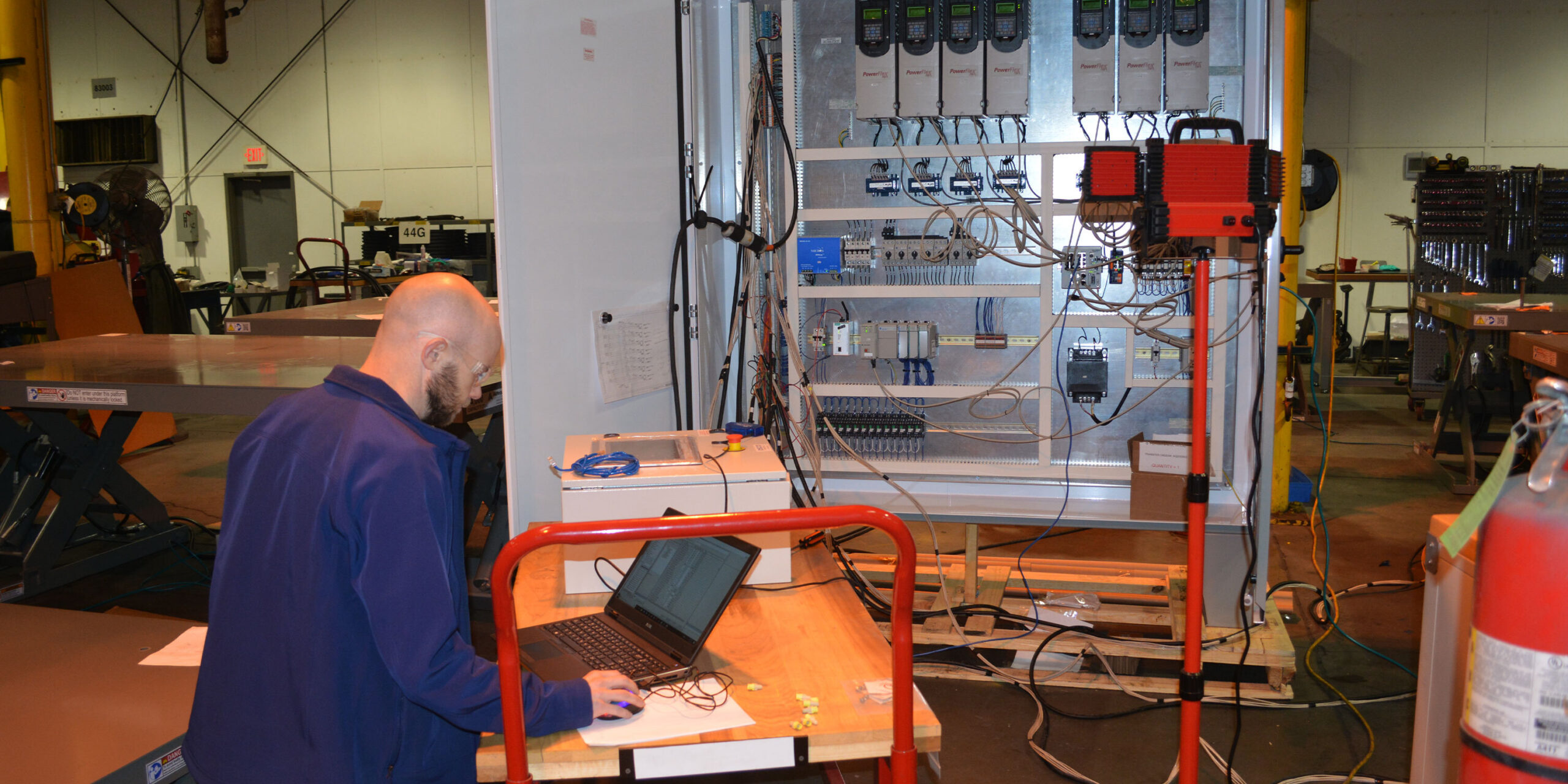
Once data is collected, it needs to be processed. Programmable Logic Controllers — PLCs — are the workhorses of industrial control systems. In a legacy integration project, PLCs can serve as the bridge between older equipment and modern monitoring platforms, processing sensor inputs, executing control logic, and making equipment data available to higher-level systems. Legacy control system upgrades often start here — by evaluating whether existing PLC hardware can be extended or whether new PLC hardware needs to be added alongside it. Legacy PLC systems that are already in place may be upgradeable; in other cases, new hardware may be the right answer.
Control Systems That Centralize Operational Information
With data collected and processed, the next layer is centralization. Modern control systems bring information from multiple pieces of equipment together into a unified view — giving operators and maintenance teams a single platform for monitoring performance across the facility. This centralized control architecture is what transforms a collection of isolated machines into a connected, visible operational environment.
Dashboards and Monitoring Interfaces
The value of integration ultimately shows up at the operator level — in dashboards and industrial monitoring systems that make equipment data accessible and actionable. Real-time performance data, historical trends, alarm conditions, and key performance indicators can all be surfaced through monitoring interfaces that give operators the visibility they need to make informed decisions about equipment operation and maintenance.
Benefits of Legacy Industrial Equipment Integration and Modernization
The case for legacy industrial equipment integration goes beyond visibility. Industrial equipment monitoring gives maintenance and operations teams something they’ve never had with older systems — actionable data. When modernizing legacy equipment through integration, the operational benefits extend across maintenance planning, reliability, and equipment lifespan.
Improved Operational Visibility
The most immediate benefit of integration is visibility. Operators gain real-time insight into equipment performance — current operating conditions, trend data, and alarm conditions — that simply didn’t exist before. When you can finally see what your equipment is doing in real time, everything else gets easier. That visibility is the foundation for everything else that integration makes possible.
Reduced Unplanned Downtime
With real-time equipment performance monitoring in place, developing issues can be identified before they become failures. Trend data reveals patterns — gradual changes in temperature, vibration, or current draw — that signal a problem is developing. Acting on those signals before failure occurs is the difference between planned maintenance and unplanned downtime.
Better Maintenance Planning
Integration gives maintenance teams something they often lack with legacy equipment: information. Historical performance data, trend analysis, and real-time condition monitoring all contribute to more informed maintenance decisions. Maintenance can shift from a time-based schedule to a condition-based approach — performing service when the equipment’s condition indicates it’s needed, rather than on a fixed interval that may be too early or too late.
Extended Lifespan of Existing Equipment
Properly maintained equipment lasts longer. When integration provides the visibility needed to catch and address developing issues early, the cumulative effect is equipment that stays in service longer and performs more reliably throughout its life. For facilities that aren’t ready to replace functioning machinery, integration is a way to get more value from existing assets while maintaining the operational reliability the facility depends on.
Common Legacy Equipment That Can Be Modernized with Monitoring Systems
Integration isn’t limited to a specific type of equipment or industry. A wide range of legacy industrial systems can be connected to modern monitoring platforms — often with less disruption than facilities expect. Common examples include:
Pumps and Compressors
Pumps and compressors are among the most integration-ready legacy systems. Monitoring parameters such as pressure, flow, temperature, and vibration can provide early warning of developing issues — bearing wear, seal degradation, and efficiency loss — before they result in failure or production impact.
Conveyors and Material Handling Equipment
Conveyor systems and other material handling equipment can be monitored for motor current draw, belt tension, speed consistency, and jam conditions. Integration allows these systems to report status in real time and trigger alerts when conditions fall outside normal operating ranges.
Production and Processing Equipment
Production machinery and processing systems — whether pumps, mixers, presses, or specialized process equipment — can often be connected to modern control systems through added sensors and communication hardware. Even equipment with no existing data outputs can typically be retrofitted to provide meaningful monitoring capability.
Supporting Industrial Modernization Through Automation Integration Solutions
At OSCO Controls, industrial modernization through automation integration is what we do. Whether a facility needs to connect a single piece of legacy equipment or modernize an entire control architecture, we bring the engineering expertise and application-specific approach to make it happen.
Connecting Legacy Equipment into Centralized Control Systems
OSCO Controls works with industrial facilities across the country to connect legacy equipment into modern control architectures — giving operators the visibility and monitoring capability they need without requiring full equipment replacement. As an Oklahoma-based company serving customers nationwide, we bring deep expertise in industrial control systems integration, cloud-based technology, and real-time monitoring — capabilities we put to work on every project. Industrial automation integration is at the core of our practice — from connecting a single machine to modernizing an entire facility’s control ecosystem.
Integrating Machines into Modern Automation Platforms
Our work in this area covers the full scope of integration — from connecting individual machines into centralized monitoring platforms to integrating entire production environments into modern automation systems. Whether the goal is improved operational visibility, better maintenance planning, or laying the foundation for broader facility modernization, we work closely with each customer to understand their specific equipment, operational environment, and objectives before recommending an approach.
Improving Operational Visibility Across Facilities
For facilities that have built their operations around equipment that still works but lacks modern monitoring capability, integration offers a path forward that respects that investment while delivering the operational insight that modern facilities need.
Straight from the Source — A Conversation with OSCO Controls’ General Manager
We asked OSCO Controls’ General Manager to share his perspective on the real-world challenges of legacy equipment integration — and what it actually takes to make modernization work without replacing functioning machinery.
What challenges do industrial facilities face when trying to monitor older or legacy equipment that wasn’t designed with modern automation systems?
“Getting the information up and out. Older equipment may not have the protocols needed to make the information available. Also, many older machines don’t even have accurate schematics anymore. This also leads to other hurdles when adding additional sensors to get better information out of the machine. Finally, older equipment may have a control system that is already at its capacity limits and from that standpoint alone, may not be able to take on additional tasks.” — Collin Prock, General Manager at OSCO Controls
How can integrating legacy equipment into modern control systems help facilities gain better visibility without replacing existing machinery?
“At a minimum, the machine can go from an island of automation, and the information it knows about itself can now be made known to the entire facility. I’ve said many times, maybe selfishly, that a good control system can make or break a machine. A poorly designed mechanical system can be whitewashed with a superior control system. Upgrading legacy equipment or connecting it can have the same effect. A company doesn’t have a large outlay of cash to purchase an entire machine but can reap similar benefits by upgrading and connecting.” — Collin Prock, General Manager at OSCO Controls
OSCO Controls in Action: Related Reading from Our Blog
Looking for more on control system modernization and automation integration? We’ve pulled a couple of resources from our blog that connect directly to the topics covered here. If you’re evaluating the state of your existing PLC infrastructure, 5 Signs Your PLC System is Becoming Obsolete is a good place to start. And for a closer look at how custom control panels support smarter automation environments, How Custom Control Panels Power Smarter Warehouse Automation Systems covers the integration side of that conversation.
Modern Monitoring Doesn’t Require Replacing What’s Already Working
Legacy industrial equipment integration is one of the most practical paths to operational modernization available to industrial facilities today. The equipment you’ve invested in doesn’t have to be replaced to give you real-time visibility into how it’s performing. With the right sensors, control systems, and integration approach, older machinery can become a connected, visible, and actively managed part of your facility’s operational environment.
OSCO Controls has the expertise to make that happen — from initial assessment through design, build, and commissioning. If you’re operating legacy equipment that lacks modern monitoring capability and want to understand what integration could look like for your facility, we’d like to have that conversation.
Connecting Legacy Equipment to the Future of Industrial Monitoring
Modern monitoring doesn’t require replacing functioning equipment. For industrial facilities operating machinery installed before modern automation was the standard, integration offers a practical path forward — real-time operational visibility, better maintenance planning, and extended equipment life without the cost of full replacement. OSCO Controls is an Oklahoma-based industrial automation integrator serving companies nationwide. We specialize in connecting legacy equipment into modern control architectures, designing the systems that make real-time monitoring possible, and supporting facilities through every stage of the modernization process. If your operation is ready to move beyond the visibility limitations of legacy equipment, we’re ready to help.
Let’s start with a conversation. Contact OSCO Controls to schedule a consultation and find out what’s possible for your operation.