
Can You Retrofit Control Panels and Still Get Full System Performance?
What happens when a critical control system starts showing its age — but full replacement isn’t in the budget, the timeline, or the plan? For facility engineers and operations leaders, aging industrial control systems create a familiar dilemma: the system is struggling, but tearing it out entirely feels like more disruption than the operation can absorb. A control panel retrofit offers a third option — one that targets what needs to change while preserving the infrastructure that still has useful life remaining. In this article, we’ll cover:
- What a control panel retrofit actually involves and how it differs from full replacement
- The conditions that make a retrofit the smarter call over full system replacement
- The key benefits of upgrading PLCs, HMIs, and connectivity without a full rebuild
- The most common scenarios that signal a retrofit is overdue
- The real cost of delaying a control system retrofit
- What a retrofit control panels project with OSCO Controls looks like from assessment through commissioning
Ready to evaluate your control systems? Talk to an OSCO Controls engineer.
Why Retrofit Control Panels Deserve a Closer Look Before You Replace
Aging control systems are a reality across manufacturing, material handling, utility, and industrial operations. PLCs reach end-of-life, HMIs become difficult to support, and panels that once performed reliably begin introducing risk — through unplanned downtime, limited parts availability, and growing maintenance demands. When those signs appear, the instinct is often to consider a complete new system replacement. It feels like the definitive solution: remove the old system, install a new one, and move forward.
But replacement isn’t always the right answer — and in many cases, it isn’t even the most practical one. A targeted control panel retrofitting strategy can deliver the modernization an operation needs without the cost, complexity, and operational disruption of starting over. For engineering teams managing aging infrastructure under real budget and uptime constraints, that distinction matters. Understanding when to retrofit versus when to replace is one of the more high-stakes decisions a facility or operations team can make, and getting it right starts with understanding what a retrofit actually involves, when it makes sense, and how it’s executed by a partner with the engineering depth to do it correctly.
What a Control Panel Retrofit Actually Involves
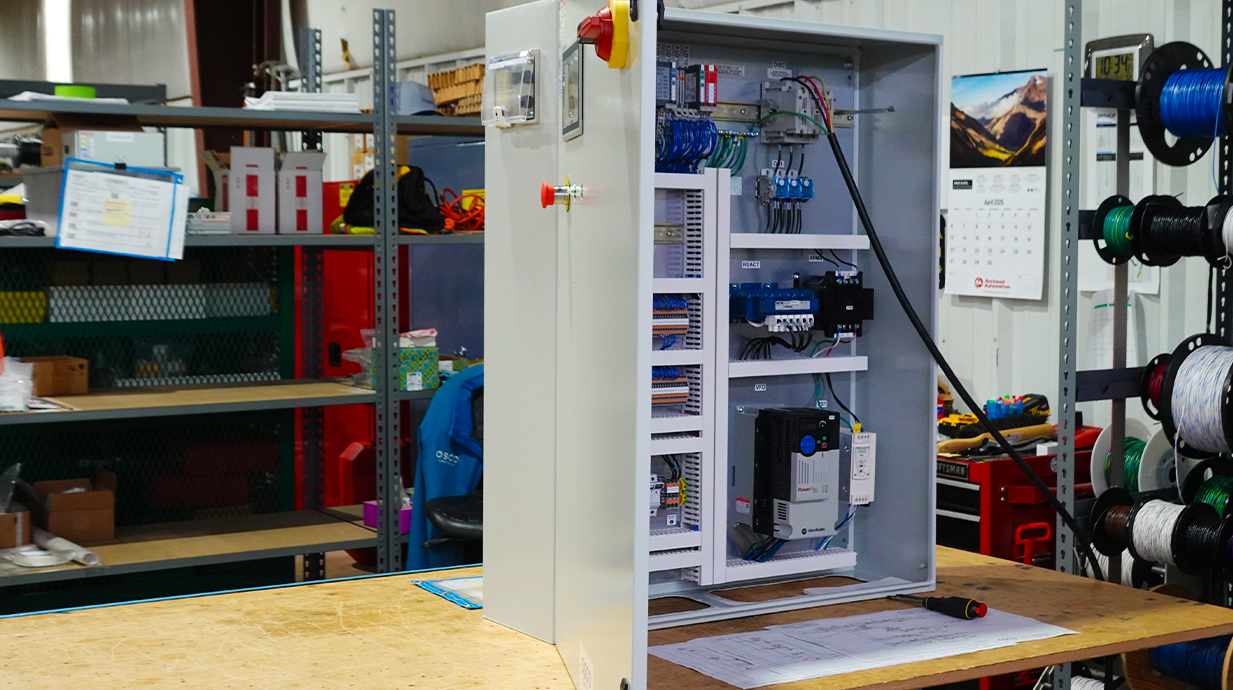
A control panel retrofit is the process of upgrading specific components within an existing panel rather than replacing the entire system. The goal is to restore reliability, extend service life, and improve functionality — while preserving the infrastructure that still has useful life remaining. It’s a targeted intervention, not a complete rebuild, and the scope is defined by what the system actually needs rather than a default assumption that everything must go.
Common Retrofit Panel Applications
Retrofit scope varies widely depending on system condition, age, and operational requirements. PLC upgrades and PLC retrofitting replace obsolete or end-of-life programmable logic controllers with current, supported platforms — restoring manufacturer support and enabling integration with modern systems. HMI replacements modernize operator interfaces, improve usability, support current software environments, and provide operators with better visibility into system performance.
Rewiring and reconfiguration address deteriorated wiring, outdated layouts, or changes in process requirements that the original panel wasn’t designed to accommodate. Connectivity additions integrate SCADA platforms, remote monitoring tools, or IIoT-compatible communication hardware, extending the panel’s capabilities to support data visibility and plant-level decision-making without requiring a full system replacement.
Retrofit vs. Full Replacement — Where the Line Is
The decision between retrofitting and replacing isn’t always straightforward, and when evaluating retrofit vs replacing control system, the right answer depends heavily on the condition and scope of what needs to change. As OSCO Controls General Manager Collin Prock explains: “When replacing the majority of the components is required because of obsolescence or having to rewire completely, it usually makes more sense to get a whole new panel built.”
That kind of direct, experience-based guidance matters — because the goal isn’t to retrofit for its own sake, but to match the right modernization strategy to the actual condition of the system. OSCO’s custom control panel design and systems integration capabilities support the full range of outcomes, from targeted component upgrades to complete panel builds, so the recommendation is always driven by what the operation actually needs.
When Retrofitting Outperforms Full Replacement
Several operational and financial conditions consistently point toward a retrofit as the more practical and cost-effective path forward. Recognizing those conditions early is what gives engineering and operations teams the most options.
Infrastructure That Still Has Life in It
If the enclosure, wiring infrastructure, field devices, and overall panel architecture are in sound condition, replacing them creates unnecessary cost and risk. A retrofit targets the components that have degraded or become obsolete — without discarding the infrastructure that still performs. When the bones of the system are solid, the smarter investment is upgrading what’s failing, not eliminating the solutions that are working.
Budget Constraints
Full panel replacement requires significant capital investment — engineering, fabrication, installation, commissioning, and the operational disruption that comes with each phase. A retrofit allows operations to modernize incrementally, addressing the highest-risk components first and spreading investment over time without sacrificing reliability.
Budget cycles don’t always align with equipment failures. When a control system begins showing signs of age, a full replacement may not be financially feasible until the next capital planning cycle — but waiting that long without any intervention introduces real operational risk. A retrofit offers a middle path: meaningful modernization that can be scoped and priced to fit within available maintenance budgets, without requiring the full capital commitment of a new panel build.
Uptime Requirements That Can’t Absorb Extended Outages
Replacing an entire control system requires extended outages for removal, installation, and commissioning. In high-uptime environments, that window of disruption is often simply not available. A planned control system retrofit can be scoped and sequenced to reduce installation time and minimize production impact — a critical advantage when every hour of downtime carries a measurable cost. Careful planning of retrofit sequencing, pre-staging components, and coordination with production schedules can significantly reduce disruption compared to a full replacement.
An Incremental Modernization Strategy Already in Place
For operations that have made a deliberate decision to modernize in phases — updating legacy systems over time rather than through a single high-risk replacement — a retrofit is the natural execution vehicle. It delivers meaningful progress on modernization goals while keeping risk contained and timelines manageable. Each phase builds on the last, and the operation moves forward without exposing a full system changeover.
The Operational Benefits of a Targeted Control Panel Retrofit
When conditions are right, a retrofit delivers measurable advantages over full replacement across cost, reliability, and integration capability. These aren’t marginal improvements — they directly affect uptime, maintenance burden, and the operation’s ability to leverage modern automation tools.
Lower Cost Without Compromising Performance
Retrofitting specific components costs significantly less than engineering, fabricating, and commissioning a new panel from the ground up. Facilities retain existing field wiring, enclosures, and infrastructure — capital already deployed — while gaining the performance improvements that matter most. For operations managing tight capital budgets, cost efficiency is often the deciding factor.
Reduced Downtime During and After Modernization
One of the more practical advantages of a retrofit over full replacement is the reduced installation window. Because the existing panel infrastructure stays in place, on-site work is scoped to the components being upgraded rather than a complete changeout — which means less time offline and a faster return to normal operations. Beyond the installation itself, upgrading to current, supported hardware reduces the frequency of unplanned outages caused by aging components, delivering ongoing downtime savings long after the retrofit is complete.
Restored Reliability and Long-Term Manufacturer Support
Upgrading to current PLC and HMI platforms restores manufacturer support, simplifies parts sourcing, and extends the serviceable life of the overall system. Teams regain access to firmware updates, vendor documentation, and technical assistance that may have lapsed on legacy platforms. That restored support structure reduces both day-to-day maintenance burden and the longer-term risk of being stranded with hardware that can no longer be serviced through normal channels.
Seamless Integration with Modern Systems and Monitoring Tools
Current control hardware supports the communication protocols and connectivity standards needed to interface with SCADA, MES, IIoT platforms, and cloud-based monitoring tools. Legacy platforms frequently lack the processing capability or protocol support required to connect with these systems, which limits visibility, restricts data access, and constrains the operation’s ability to pursue broader digital initiatives. OSCO Connect, OSCO’s proprietary cloud-based platform, enables remote monitoring of system processes, status alerts, and performance conditions from anywhere — capabilities that older control hardware often cannot support without a targeted upgrade.
Recognizing the Signs — Common Control Panel Retrofit Scenarios
Not every aging control system presents the same warning signs, but certain conditions consistently indicate that a retrofit deserves a closer look. Recognizing these scenarios early is what separates a proactive modernization from a reactive emergency.
Obsolete PLC Platforms
When a PLC reaches end-of-support or end-of-life, risks accumulate quickly — reduced cybersecurity posture, limited vendor assistance, and growing difficulty sourcing compatible components. Upgrading the PLC to a current, supported platform through a targeted industrial control panel retrofit is often the most effective way to reduce that exposure without replacing the entire system. For a detailed look at the warning signs that signal a PLC is approaching obsolescence, see OSCO’s related blog: 5 Signs Your PLC System Is Becoming Obsolete.
Failing Components or Unreliable Performance
Intermittent faults, unexplained resets, and increasing maintenance demands are common indicators that aging hardware is approaching the end of its reliable service life. When maintaining system stability requires growing effort year over year, the control system is no longer supporting operations — it’s constraining them. A targeted retrofit that replaces failing components can restore reliable performance without the cost and disruption of a full panel replacement.
Lack of Integration with SCADA or IIoT
Legacy control hardware often lacks the communication protocols or processing capability required to connect with modern monitoring and data platforms. When a control system limits integration rather than enabling it, operational agility declines and broader digital initiatives stall. A retrofit that introduces current PLC and networking hardware can restore connectivity and support plant-wide visibility without requiring a full system replacement.
Safety or Compliance Updates
Regulatory requirements evolve, and control systems engineered to earlier standards may require updates to meet current safety specifications. Operating aging systems with known compliance gaps introduces risk that extends beyond operational disruption — it creates liability exposure and can affect the operation’s ability to meet audit or certification requirements. A targeted retrofit that addresses safety or compliance updates is almost always less disruptive and less costly than addressing those gaps reactively after an incident or inspection.
Don’t Wait for a Failure — The Real Cost of Delaying a Control System Retrofit
Deferring modernization when warning signs are present introduces risks that grow over time and become significantly more expensive to address reactively. The gap between a proactive retrofit and a reactive emergency replacement is measured in terms of downtime, costs, and operational disruption.
Increased Unplanned Downtime
Aging components fail unpredictably. When a critical failure occurs in a system with limited support infrastructure, the path to recovery is rarely fast or straightforward. Every hour offline has a direct impact on output and revenue — and unplanned failures don’t accommodate production schedules or capital planning cycles.
Emergency Replacement Costs
Reactive replacements compress decision-making timelines, limit vendor options, and consistently cost more than planned upgrades. Engineering resources get redirected, procurement timelines get compressed, and the operational disruption extends well beyond the repair itself. The cost premium of an emergency response — versus a planned retrofit — is often significant enough to have funded the proactive upgrade several times over.
Loss of Production
When a line or process goes down unexpectedly, the impact extends beyond the immediate repair. Production schedules get disrupted, downstream commitments are affected, and recovery timelines are rarely as short as initially projected. The longer an aging system is left unaddressed, the greater the exposure to exactly this kind of cascading disruption.
Limited Parts Availability
As control hardware ages past end-of-life, sourcing replacement components becomes increasingly difficult. Lead times for aging components extend, costs increase, and availability can change without notice. In some cases, the parts simply aren’t available when needed — turning what should be a manageable repair into a protracted outage. Dependence on scarce replacement parts is one of the clearest indicators that a proactive PLC retrofit or broader panel upgrade is overdue.
What a Retrofit Project with OSCO Controls Looks Like
No two control systems are alike — and neither are the different types of operations that depend on them. With decades of experience in industrial control panel design and systems integration, OSCO Controls brings a client-centric approach to every retrofit project, tailoring each solution to the specific application, environment, and goals of the facility it serves. The process is structured to protect what matters most to your operation: uptime, reliability, and confidence in the outcome.
Assessment and Planning
Every project begins with a collaborative evaluation of your existing control system — its condition, its role in your operation, and what modernization needs to accomplish for your specific application. OSCO’s engineers take the time to understand your production environment, uptime requirements, and long-term goals before making a single recommendation. This is where retrofit scope is defined, and the retrofit-versus-replace question gets answered with clarity — based on what your system actually needs, not a one-size-fits-all approach.
Product Design and Engineering
With scope established, our engineering team develops a control system design built around your unique requirements — including PLC and HMI programming, panel layout, and integration architecture tailored to your application. OSCO’s programming capabilities span PLC ladder logic, structured text, function block diagram, HMI development, and PC-based systems, giving your team access to the right solution regardless of the complexity involved. Every design decision is made with your operational goals in mind, so the retrofitted system is engineered to perform from day one.
Fabrication and Panel Modifications
With the design finalized, OSCO sources the required components and fabricates the panel’s internal structure to support the controlled operation requirements of your application. Work is executed to the same exacting standards as a new build — because the goal is a system that performs like one. Rigorous quality control and pre-installation testing are built into the process, designed to compress the on-site installation window and minimize disruption to your production schedule.
Installation and Commissioning
We provide on-site support through installation, startup, and commissioning — ensuring the retrofitted system performs exactly as designed before handoff. Your operation shouldn’t have to adapt to the solution; the solution should be built to fit your operation. Support doesn’t end at the panel door — OSCO offers continued on-site assistance as your needs evolve, giving your facility a long-term controls partner invested in your success.
Partner with OSCO Controls to Evaluate Your Retrofit Options
Proactive evaluation gives engineering and operations teams the time and information needed to plan upgrades strategically — aligning modernization with maintenance schedules, capital cycles, and production requirements. Acting before aging systems force a reactive decision is the difference between a controlled modernization and a costly emergency response. The earlier the evaluation begins, the more options are available.
OSCO Controls is an Oklahoma-based industrial controls manufacturer serving companies across the country. Whether your operation needs a targeted PLC upgrade, an HMI replacement, SCADA integration, or a broader panel modernization, OSCO brings the engineering experience and hands-on support to execute it right — from initial assessment and design through fabrication, installation, and commissioning. Every project begins with a collaborative discussion to define objectives, application requirements, and environment — because the right solution starts with understanding what the operation actually needs.
Evaluate your current control systems for retrofit opportunities. Contact OSCO Controls to start the conversation.
OSCO Controls — Your Experienced Partner for Control Panel Retrofit and Modernization
A control panel retrofit isn’t a compromise — it’s a deliberate modernization strategy that delivers real results when applied to the right situation. For operations with viable infrastructure, budget constraints, or uptime requirements that make full replacement impractical, retrofitting control panels delivers the reliability and capability improvements that matter most, on a timeline and cost structure that works. The key is acting before aging systems force a reactive decision. OSCO Controls has the engineering depth, hands-on experience, and comprehensive service capabilities to help your team evaluate, plan, and execute the right modernization path — whether that means a targeted component upgrade or a complete panel build.
Not sure if a retrofit is right for your system? Connect with our team today!