
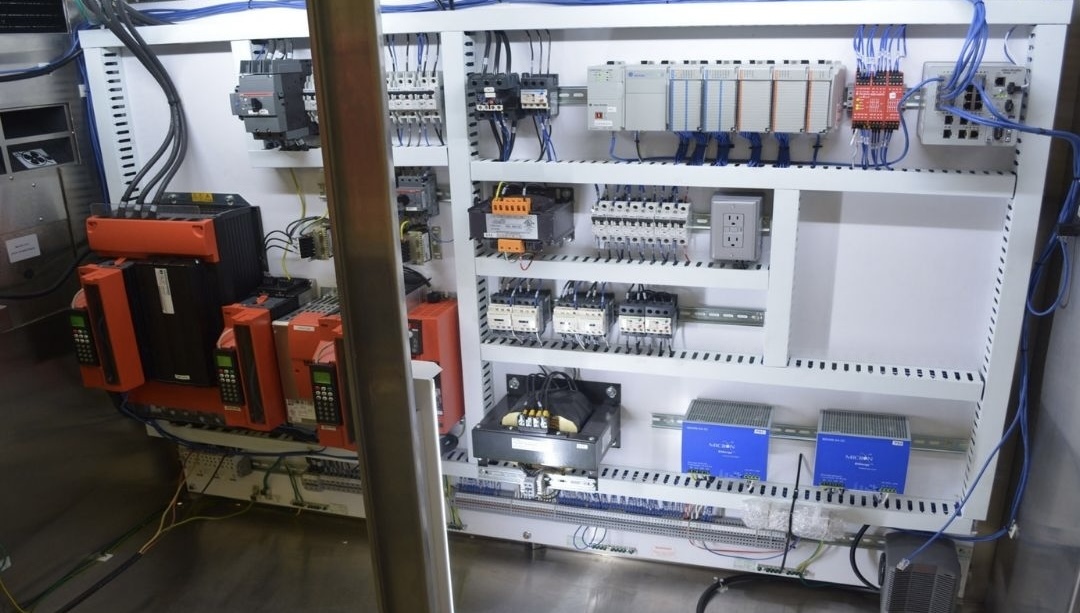
Legacy PLC Systems — Hidden Limitations That Can Hold Modern Manufacturing Back
Manufacturing operations are more connected and data-driven than ever. Modern facilities depend on real-time visibility, seamless system integration, and automation platforms that scale with production demands. But for many manufacturers, the foundation supporting those ambitions is decades old — aging PLC infrastructure that was never designed for the environment it’s now being asked to operate in.
Legacy PLC systems don’t always fail visibly. They create friction — in the form of integration gaps, limited data access, rising maintenance costs, and reliability issues that compound quietly over time. Understanding where those limitations live, and what they cost operationally, is the first step toward a modernization strategy that goes beyond simply replacing old hardware.
This blog explores how legacy PLC systems can limit modern manufacturing operations — and how PLC modernization positions facilities for better efficiency, reliability, and long-term competitiveness:
- What defines a legacy PLC system and why it matters
- How older systems limit integration with modern manufacturing platforms
- The reliability and maintenance risks that come with aging automation systems
- The operational inefficiencies that legacy systems introduce over time
- Cybersecurity and supportability concerns that grow with system age
- The benefits of PLC modernization for manufacturing operations
- How to plan a modernization strategy that minimizes disruption
When Aging Automation Infrastructure Becomes a Strategic Liability
Most manufacturing facilities didn’t set out to build their operations on aging automation infrastructure. PLC systems get installed, they work, and the years add up. What was current-generation hardware a decade ago becomes legacy equipment — still running, but increasingly disconnected from the tools, platforms, and capabilities that modern manufacturing depends on.
The challenge with aging PLC infrastructure isn’t always an obvious failure. It’s the accumulation of limitations that don’t individually stop production but collectively drag on efficiency, visibility, and reliability. Integration gaps that require manual workarounds. Diagnostic capabilities that can’t support predictive maintenance. Replacement parts that take weeks to source. These are the hidden operational costs of aging automation systems — and they tend to grow quietly until they become a crisis.
What Defines a Legacy PLC System?
Not every older PLC system is a legacy system by default — but certain characteristics consistently signal that a system has crossed from dependable legacy asset to operational liability. Recognizing those characteristics early is what separates a planned, controlled system upgrade from an unplanned replacement after a failure forces the issue.
Aging or Unsupported Hardware and Software
Legacy PLC systems are often defined first by their support status. Manufacturers formally transition platforms through end-of-support — when firmware updates and security patches stop — and end-of-life, when hardware is no longer manufactured or officially supported. Once a system crosses either threshold, responsibility for supportability increasingly shifts to the facility. Running unsupported hardware and software isn’t just a maintenance inconvenience — it’s an operational and security risk that compounds with every year the system stays in place.
Limited Compatibility with Modern Automation Platforms
PLC systems installed before the rise of IIoT, cloud connectivity, and data-driven manufacturing were not designed for today’s connected environments. Many older PLCs cannot communicate natively with modern platforms.
SCADA systems, MES platforms, analytics tools, and edge computing solutions all rely on seamless data exchange. When older PLCs cannot support these connections, manufacturers often rely on workarounds. These may include middleware, manual data entry, or communication bridges. As a result, systems become more complex, less reliable, and harder to maintain.
Dependence on Outdated Programming Tools and Components
Legacy systems frequently depend on programming environments that are no longer actively developed or supported. When the engineers who know those tools leave, institutional knowledge goes with them. Finding qualified technicians who can troubleshoot, modify, or expand a legacy PLC program becomes progressively harder — and more expensive — over time. What should be a routine change becomes a specialized project.
Limited Integration with Modern Manufacturing Systems
One of the highest operational costs of aging control infrastructure is the integration gap these systems create between the control layer and the platforms that modern manufacturing operations depend on. That gap doesn’t just limit what facilities can see — it limits what they can do.
Challenges Connecting to SCADA, MES, IIoT, and Analytics Platforms
Modern manufacturing control systems depend on data exchange across platforms — from the PLC level up through SCADA, MES, and analytics environments. Legacy systems often lack the communication protocols, network interfaces, or processing capability to participate in those exchanges natively. Connecting them requires custom integration work that adds cost, complexity, and maintenance burden — and even then, data flow is often incomplete or unreliable.
Data Visibility and Communication Limitations
When PLCs can’t communicate effectively with higher-level systems, operational visibility suffers. Production data stays siloed at the machine level. Supervisors and operations leaders work with incomplete or no real-time information about what’s happening on the floor. Decisions that should be data-driven become judgment calls, and the opportunity to identify inefficiencies and optimize performance is lost to the limitations of the control system.
Difficulty Supporting Real-Time Monitoring and Predictive Maintenance
Predictive maintenance depends on real-time data — equipment performance metrics, trend analysis, and early warning indicators that signal a developing issue before it becomes a failure. Obsolete PLC systems that can’t stream data to monitoring platforms make predictive maintenance strategies effectively impossible. Maintenance stays reactive rather than planned, and the cost of unplanned failures continues to accumulate.
Increasing Reliability and Maintenance Risks
Aging automation systems introduce risk that doesn’t appear on a production schedule until something goes wrong. The reliability profile of a legacy PLC system changes over time — and not in the facility’s favor.
Hardware Failures and Aging Components
Electronic components have a limited service life. Capacitors degrade over time. Connectors corrode, and circuit boards can develop intermittent faults that are difficult to diagnose.
As PLC hardware ages, the risk of component failure increases. These failures often happen at the worst possible time. A control system failure during production can result in costs that extend far beyond replacing the failed component.
Limited Replacement Parts and Manufacturer Support
When PLC platforms reach end-of-life, replacement parts become scarce. Standard stocked components become specialty items sourced from third-party suppliers or refurbishers — with longer lead times, higher costs, and no manufacturer warranty. For facilities that discover a critical component is unavailable during a production outage, the consequences can be severe. A control system upgrade starts to look very different when the alternative is an extended outage waiting for a part that may not come.
Growing Maintenance Costs and Downtime Risks
The cumulative effect of aging hardware, limited parts availability, and the specialized knowledge required to maintain legacy systems is a maintenance cost curve that bends steadily upward. At a certain point, the annual cost of maintaining a legacy PLC system approaches or exceeds the cost of modernization — without any of the operational improvements modernization would deliver.
Operational Inefficiencies Caused by Legacy Systems
Beyond the reliability risks, older control systems introduce day-to-day inefficiencies that affect throughput, responsiveness, and the facility’s ability to adapt to changing production demands.
Slower Troubleshooting and Diagnostics
Legacy PLC systems typically offer limited diagnostic capability compared to modern platforms. When an issue occurs, troubleshooting relies on manual inspection, in-house expertise, and the process of elimination rather than system-generated diagnostics. That extends the time between fault detection and resolution — and in a production environment, every minute of extended troubleshooting is a minute of lost output — with direct implications for production schedules and revenue.
Manual Processes and Lack of Automation Visibility
Systems that can’t communicate with broader automation platforms require manual data collection, manual reporting, and manual intervention in processes that modern control systems handle automatically. That reliance on manual processes introduces variability, slows response times, and consumes operator and maintenance time that could be directed toward higher-value work.
Reduced Scalability for Future Production Needs
Legacy systems weren’t designed for today’s production environments, let alone tomorrow’s. Expanding capacity, adding new equipment, diversifying product lines, or integrating new automation technologies into an existing legacy control architecture is significantly more complex and costly than doing the same with a modern platform. Facilities that want to scale or adapt quickly find that legacy infrastructure becomes a constraint rather than a foundation.
Cybersecurity and Supportability Concerns
As manufacturing environments become more connected, the cybersecurity implications of aging automation systems deserve serious attention. These platforms weren’t designed with modern security requirements in mind — and the gap between what they offer and what connected industrial environments require continues to widen.
Unsupported Firmware and Software Vulnerabilities
Legacy PLC systems running unsupported firmware are effectively unpatched — known vulnerabilities exist with no manufacturer-provided remediation. As manufacturing networks become more connected to enterprise systems, cloud platforms, and remote access tools, the attack surface expands — and the consequences of a breach grow with it.
Difficulty Implementing Modern Security Standards
Modern industrial cybersecurity frameworks — including NIST and IEC 62443 — assume system capabilities that many legacy PLC platforms don’t have. Role-based access control, encrypted communications, audit logging, and network segmentation are often absent or limited in older systems. Bringing legacy infrastructure into compliance can require extensive workarounds — or may not be achievable without hardware replacement.
Risks Associated with Unsupported Operating Systems and Networks
Many aging systems run on operating systems that no longer receive security updates. Combined with aging network infrastructure, this creates a compounding risk profile that’s difficult to manage through operational controls alone.
Benefits of PLC Modernization
PLC modernization isn’t just about replacing aging hardware. It’s a strategic investment in the operational foundation that powers everything else in a modern manufacturing facility.
Improved System Reliability and Uptime
Modern PLC platforms are supported by active manufacturers, backed by current warranty programs, and designed for connected industrial environments. Replacing legacy systems with current-generation hardware reduces component failure risk, eliminates the parts availability problem, and provides a supported foundation for the control layer at the core of your operation.
Better Data Visibility and Operational Transparency
Modern control systems are designed to participate in the data ecosystems that manufacturing operations need. Real-time data exchange with SCADA, MES, IIoT, and analytics platforms becomes straightforward — giving operations teams the visibility to make informed decisions, identify inefficiencies, and respond to production events in real time.
Easier Integration with Modern Automation Technologies
A modernized control system is a platform for capability expansion rather than a constraint on it. Adding new equipment, integrating robotics, or implementing predictive maintenance tools all become more achievable when the control layer is built on a current, well-supported platform. OSCO Controls’ programming expertise and custom control panel design capabilities ensure modernization projects are engineered for each facility’s specific requirements.
Increased Scalability and Long-Term Supportability
Modern PLC platforms are designed with scalability in mind — expandable I/O, modular architectures, and software environments that support ongoing development. Long-term manufacturer support, active development communities, and broad ecosystem compatibility ensure the investment retains its value over time.
Planning a Modernization Strategy
Effective PLC modernization doesn’t happen overnight — and it shouldn’t. A well-planned strategy accounts for the current system’s limitations, the facility’s operational requirements, long-term production goals, and the practical realities of implementing change in a production environment.
Assessing Current System Limitations
The first step is an honest assessment of your current system. Evaluate what it can and can’t do, identify integration gaps, review its reliability history, and understand the cost of maintaining legacy infrastructure.
This assessment creates the foundation for a modernization business case. It also helps identify which systems pose the greatest operational risk and should be prioritized.
Retrofit vs. Upgrade vs. Full Replacement Considerations
Not every modernization project requires a complete system replacement. Some systems can be retrofitted with modern communication modules. Others may only need a software upgrade while keeping compatible hardware. In some cases, a full hardware and software replacement is the best option.
Each approach has different costs, levels of complexity, and operational impacts. The right choice depends on the system, its age, and your long-term operational requirements.
As a trusted OEM controls and automation partner with deep experience across control system platforms — including working alongside Autoquip and Rockwell Automation to support long-term PLC platform strategies — OSCO Controls helps facilities evaluate those options objectively and recommend an approach that fits both the technical requirements and the operational reality.
Importance of Phased Planning and Minimizing Downtime
In active production environments, modernization has to be planned around operational realities. Phased implementation — replacing systems in stages while maintaining production continuity — is often the most practical approach. Careful sequencing, thorough testing, and a clear rollback plan for each phase help ensure modernization doesn’t introduce disruptions of its own. The goal is a modernized control environment, achieved without trading one form of operational risk for another.
From the Field — Related Reading from the OSCO Controls Blog
Looking for more on aging automation systems and the case for modernization? We’ve pulled a couple of resources from our blog that are worth reading. If you’re not sure whether your PLC infrastructure has become an operational liability, 5 Signs Your PLC System is Becoming Obsolete is a practical starting point. And for a look at how modernization extends beyond the control system itself, Modernizing Legacy Industrial Equipment Monitoring explores what connected monitoring enables when older equipment is integrated into modern control architectures.
Modernization Starts with an Assessment — Let’s Evaluate Your Options
Legacy PLC systems can quietly limit productivity, visibility, and growth without ever triggering a visible failure. The limitations accumulate gradually — in the integration gaps that require workarounds, the maintenance costs that keep climbing, and the capabilities you can’t add. Industrial automation modernization isn’t just about replacing old hardware. It’s about building a control foundation that supports the operation you’re running today and the one you’re planning for tomorrow.
OSCO Controls is an Oklahoma-based industrial controls and integration specialist serving manufacturers nationwide. We work with facilities to evaluate aging automation systems, identify operational risks and integration limitations, and develop modernization strategies that are practical, phased, and designed to minimize disruption to production.
OSCO Controls — Your Partner for PLC Modernization and Automation
Legacy PLC systems can reduce productivity and limit future growth. These issues often go unnoticed until the cost of inaction becomes too high. Modernization helps manufacturers improve efficiency, stay competitive, and support today’s connected industrial environments.
Our team brings the engineering expertise, platform knowledge, and practical experience to evaluate your current systems. We’ll help you understand your options and build a modernization plan with confidence.
Connect with OSCO Controls today to evaluate your legacy PLC systems. Discover how modernization can improve your operation.