How to Plan a Control System Upgrade Without Disrupting Your Operation
Most control system upgrades don’t fail because of the technology — they fail because of the planning. Or the lack of it. Engineering and operations teams that wait until a PLC fails, a panel becomes unsupportable, or a critical part is no longer available find themselves making rushed decisions under pressure, with limited options and maximum disruption. A proactive, structured approach changes that equation entirely. In this article, we’ll cover:
- The warning signs that tell you modernization can’t wait much longer
- How to define the right scope — upgrade, retrofit, or full replacement
- The key planning steps that keep modernization projects on track and on budget
- Strategies for minimizing downtime and operational disruption during the upgrade
- Common mistakes that derail control system projects and how to avoid them
- What to look for in an automation partner when it’s time to move forward
Ready to evaluate your control systems? Get expert input from OSCO Controls today.
Why Control System Upgrades Fail — And How to Make Sure Yours Doesn’t
Aging programmable logic controllers and control panels don’t fail all at once. They degrade gradually — reliability issues increase, parts become harder to source, integration with modern systems becomes impossible, and maintenance demands grow year over year. By the time a system reaches the point of failure, the upgrade project that should have been planned months earlier is now a crisis response. That’s when costs spike, timelines compress, and the risk of extended downtime becomes very real.
A structured approach to industrial automation modernization starts long before a failure occurs. It begins with recognizing the warning signs, defining the right scope, and building a project plan that accounts for the technical, operational, and financial dimensions of the work. The goal isn’t just to replace aging hardware — it’s to modernize in a way that supports long-term reliability, integration, and growth.
Recognizing the Signs — When It’s Time for a Control System Upgrade
Control systems rarely announce when they’ve crossed the line from dependable legacy assets to operational liabilities. The transition happens gradually, through a pattern of warning signs that, taken together, signal that modernization is no longer optional.
Signs of Aging or Obsolete PLC Systems
When a PLC platform reaches end-of-support or end-of-life, the risks accumulate quickly. Manufacturer firmware updates stop. Technical support becomes unavailable. Security vulnerabilities go unpatched. Replacement components become increasingly difficult to source — and when they can be found, lead times extend and costs increase unpredictably.
Reliability and Maintenance Challenges
Aging control hardware introduces reliability problems that compound over time. Intermittent faults, unexplained resets, and increasing maintenance demands signal that components are approaching the end of their reliable service life. When maintaining system stability requires growing effort year over year — more technician hours, more workarounds, more reactive repairs — the control system has crossed from an asset into a liability. These trends don’t reverse on their own, and they rarely stay manageable indefinitely.
Integration Limitations with Modern Systems
Legacy PLC platforms often lack the communication protocols, processing capability, or cybersecurity features required to connect with SCADA platforms, MES systems, IIoT tools, and plant-level data collection infrastructure. When a control system limits integration rather than enabling it, the broader automation strategy stalls. Facilities that cannot access real-time operational data, connect to cloud-based monitoring, or align aging automation with modern digital initiatives are operating at a competitive disadvantage that only grows over time.
For a closer look at the specific warning signs, see our related blog: 5 Signs Your PLC System Is Becoming Obsolete.
Defining the Right Scope — Upgrade, Retrofit, or Full Replacement
One of the most important early decisions in any control system project is defining the right scope. Some aging systems need a complete rebuild. Others need something far less disruptive. Getting this decision right has significant implications for budget, timeline, and long-term performance.
What Constitutes a Control System Upgrade
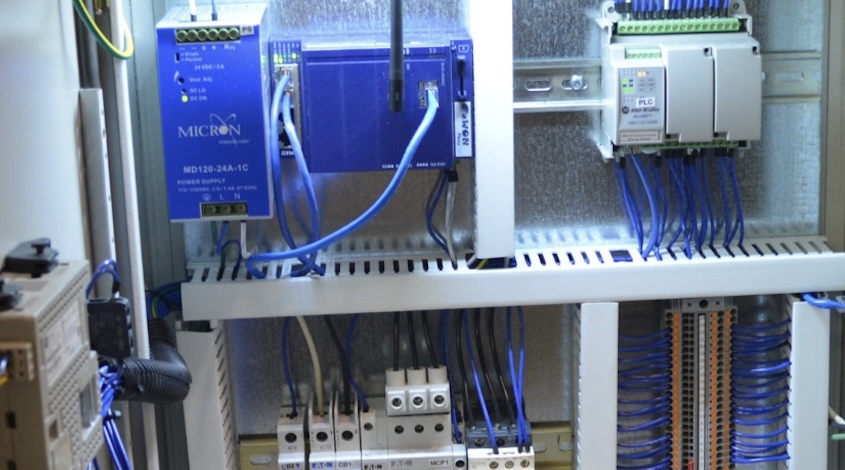
A control system upgrade typically involves replacing specific components —programmable logic controllers, HMIs, drives, or communication hardware — within an existing panel or system architecture. The goal is to restore manufacturer support, improve reliability, and enable integration with modern systems, without necessarily replacing the entire panel or control infrastructure. This approach is appropriate when the existing architecture is sound and the primary need is to modernize specific elements that have become obsolete or unsupported.
When Retrofit Makes Sense vs. Full Replacement
A retrofit preserves viable infrastructure while targeting the components that need to change. It’s the right choice when the enclosure, wiring, and field devices are in good condition, and the scope of change is limited enough that starting from scratch would create unnecessary cost and disruption.
Full replacement makes more sense when the majority of components are obsolete, when rewiring is required, or when the existing architecture can’t support the performance or integration requirements of the modernized system. For a deeper look at the retrofit vs. replace decision, see our blog: Retrofit Control Panels: When to Upgrade Instead of Replace.
Budget, Downtime, and Operational Considerations
Scope decisions can’t be made on technical grounds alone. Budget cycles, production schedules, and operational constraints all shape what’s feasible and when. A full replacement may be the right long-term answer, but if it requires extended downtime during peak production, a phased upgrade or retrofit may be the more practical near-term path. Defining scope with a clear understanding of these operational realities — not just the technical requirements — leads to better decisions and more successful projects.
Key Steps in Planning a Control System Upgrade
A well-planned modernization project follows a structured sequence that moves from assessment through execution without leaving critical decisions to chance. Each step builds on the last, and skipping steps is one of the fastest ways to introduce cost overruns, schedule delays, and performance gaps.
System Assessment and Audit
Every upgrade project should begin with a thorough assessment of the existing control system — its condition, its architecture, its integration points, and its documentation. The assessment identifies which components are at or near end-of-life, which can be retained, and where the highest-risk vulnerabilities exist. It also establishes a baseline for the project scope and provides the technical foundation that all subsequent planning decisions depend on. An assessment conducted by experienced engineering control systems professionals surfaces issues that internal teams may have normalized over time.
Identifying Critical Components
Not all components carry equal risk or equal replacement priority. PLCs, HMIs, drives, power supplies, communication modules, and safety systems each have their own lifecycle profiles and failure modes. Identifying which components are most critical to reliable operation — and which represent the highest risk of near-term failure or unavailability — allows the upgrade plan to be structured around actual operational priorities rather than arbitrary scope decisions.
Selecting Modern Hardware and Platforms
Choosing hardware for a programmable logic controller upgrade or control panel upgrade involves more than replacing the existing platform. Your team must also evaluate communication protocols, programming software, cybersecurity requirements, and long-term vendor support.
Selecting a platform with a strong product roadmap and broad ecosystem support helps reduce future risk. It can also prevent another obsolescence cycle within the next five to ten years.
Planning for Scalability and Future Integration
A control system upgrade is a significant investment, and it should be engineered to deliver value well beyond the immediate modernization need. Planning for scalability means selecting hardware and software platforms that can accommodate future expansion — additional I/O, new production lines, integration with emerging automation technologies. Planning for future integration means ensuring that the upgraded system can communicate with SCADA, IIoT, and cloud-based monitoring platforms as those initiatives evolve.
Treating the project as a full automation system upgrade — not just a hardware swap — is what separates a modernization that lasts from one that needs to be revisited in five years. Custom controls designed with scalability in mind protect the investment and reduce the cost of future changes.
Minimizing Downtime and Operational Disruption
Downtime during a control system upgrade is often the primary concern for plant managers and operations leaders — and rightly so. A well-structured upgrade plan addresses this concern directly by implementing strategies that reduce the window of disruption without compromising the quality of the work.
Phased Upgrade Strategies
Phased upgrades allow you to modernize your system over time. They address the highest-risk components first and spread the work across planned maintenance windows. This approach keeps your system operational during the upgrade process.
Each phase can be tested and validated before the next begins. In addition, spreading the investment over time can reduce upfront costs. This makes large modernization projects more financially manageable.
Pre-Build and Testing Approaches
One of the most effective ways to minimize on-site installation time is to pre-build and test the upgraded system — or as much of it as possible — in a controlled shop environment before it goes near the production floor. We design, assemble, and test upgraded panels and systems at our facility, validating performance and integration before on-site installation begins. This approach significantly compresses the on-site work window, reducing the production impact of the upgrade event itself.
Scheduling Around Production Needs
Upgrade timing should be driven by production schedules, not just engineering availability. Planned maintenance shutdowns, seasonal slowdowns, and scheduled production changeovers all represent opportunities to execute upgrade work with minimal impact on output. Building the upgrade schedule around these windows — and communicating it clearly and well in advance to operations, maintenance, and production teams — is a basic planning discipline that is frequently underestimated in its impact on project success.
Common Mistakes That Derail Control System Upgrade Projects
The most avoidable modernization failures share common root causes. Recognizing these patterns before a project begins is one of the most valuable things an engineering or operations team can do.
Waiting Too Long to Upgrade
Reactive upgrades cost more, take longer, and cause more disruption than planned upgrades. They often begin after an unexpected equipment failure.
For example, a critical programmable logic controller may fail without a replacement in inventory. A control panel may become inoperable with no documentation available. A vendor support cutoff may also eliminate remote troubleshooting. In each case, the costs extend far beyond the price of the hardware.
Early evaluation and proactive planning are almost always more cost-effective than an emergency response.
Underestimating Project Scope
Control system projects often expand in scope after the assessment and engineering phases reveal the true condition of the existing system. Hidden wiring issues, undocumented modifications, missing components, and unexpected integration requirements can all increase project scope.
A thorough upfront assessment helps identify these issues early. It also creates a more accurate project scope than an estimate based only on visible components. As a result, your team can reduce surprises and keep the project on track.
Ignoring Future Scalability and Support
Selecting replacement hardware based only on current requirements is a common mistake. It can lead to another modernization project sooner than expected.
For example, a new PLC platform may not support the communication protocols needed for future IIoT initiatives. The vendor’s product roadmap may also indicate another end-of-life designation is approaching. In either case, the upgrade does not solve the underlying problem.
Instead, evaluate future scalability and long-term vendor support during the hardware selection process.
Lack of Documentation or System Knowledge
Undocumented control systems are among the most challenging upgrade environments. When as-built wiring diagrams don’t match the actual installation, PLC programs haven’t been backed up, or institutional knowledge exists only in the memory of personnel who may no longer be available, the engineering effort required increases dramatically. Good documentation practices throughout the life of a control system aren’t just maintenance discipline — they’re upgrade insurance.
Choosing the Right Automation Partner for Your Upgrade Project
When evaluating automation partners for a project like this, engineering expertise, industry experience, and long-term support capability all matter — and they’re worth assessing carefully before a project begins.
Control Systems Integration and Engineering Expertise
This work is fundamentally an engineering project, not a parts replacement. The partner executing it needs deep experience with both legacy systems and modern automation architectures — understanding how older platforms behave, what the common failure modes are, and how to migrate programs and configurations to new hardware without introducing errors. Our systems integration and programming capabilities span the full range of PLC platforms, HMI environments, and communication architectures, giving engineering teams a partner with the technical depth to handle complex modernization projects.
UL508A Panel Builders and Certified Quality
For organizations upgrading industrial control panels, certification credentials deserve careful consideration. We are a certified UL508A panel shop, which means every panel we build or modify has been evaluated, tested, and proven to meet UL508A safety standards — and we are subject to unannounced UL inspections to ensure ongoing compliance. That certification provides confidence that the upgraded panel meets national and local electrical codes and will perform safely throughout its service life.
Long-Term Support and Service Considerations
The right partner shouldn’t disappear after commissioning. The long-term value of the relationship depends on the availability of ongoing support — troubleshooting assistance, program modifications, system expansions, and field service when issues arise. Our custom control panel capabilities and on-site support services are designed to provide continuity well beyond the initial project, giving facilities a partner they can rely on as their systems and requirements evolve.
Partner with OSCO Controls for Expert Upgrade Planning and Execution
Proactive modernization protects uptime and restores system reliability. It also supports integration with modern automation platforms and improves long-term performance.
By contrast, reactive replacement increases costs and shortens project timelines. It can also cause operational disruptions that proactive planning helps prevent.
OSCO Controls is an Oklahoma-based industrial controls manufacturer serving companies across the country. With deep expertise in PLC modernization, control panel upgrades, and automation system integration, OSCO brings the engineering experience and hands-on capability to guide your team from initial assessment through final commissioning — and beyond.
Ready to build a smarter modernization plan? Reach out to our team to get started.
OSCO Controls — Engineering Expertise You Can Count On for Control System Upgrades
Planning a control system upgrade before equipment fails is one of the smartest investments a manufacturing or industrial facility can make. Warning signs usually appear well in advance, including declining equipment reliability, limited parts availability, integration challenges, and increasing maintenance demands.
By acting early, your team has more time to plan and implement a well-engineered modernization with minimal disruption. As a result, you can improve system performance while maximizing long-term value.
Our team brings the engineering expertise, certifications, and hands-on experience to evaluate your current systems. We then develop a modernization plan that supports your long-term goals.
Get expert guidance on your existing programmable logic controller and control panels. We’ll help you determine whether a retrofit, upgrade, or full replacement is the best solution. Talk to an OSCO Controls engineer today.